The Engineering Behind a Flawless Hold
In the world of hair prosthetics and styling, the performance of a lace wig often comes down to the quality of the adhesive used. A superior lace glue is the cornerstone of a secure, natural-looking installation, providing the confidence wearers need. However, not all adhesives are created equal. The technical formulation of these products involves a complex balance of adhesion strength, skin safety, and environmental resistance. Understanding these technical aspects is crucial for brands looking to develop a product that stands out in a competitive market and for stylists who demand uncompromising reliability.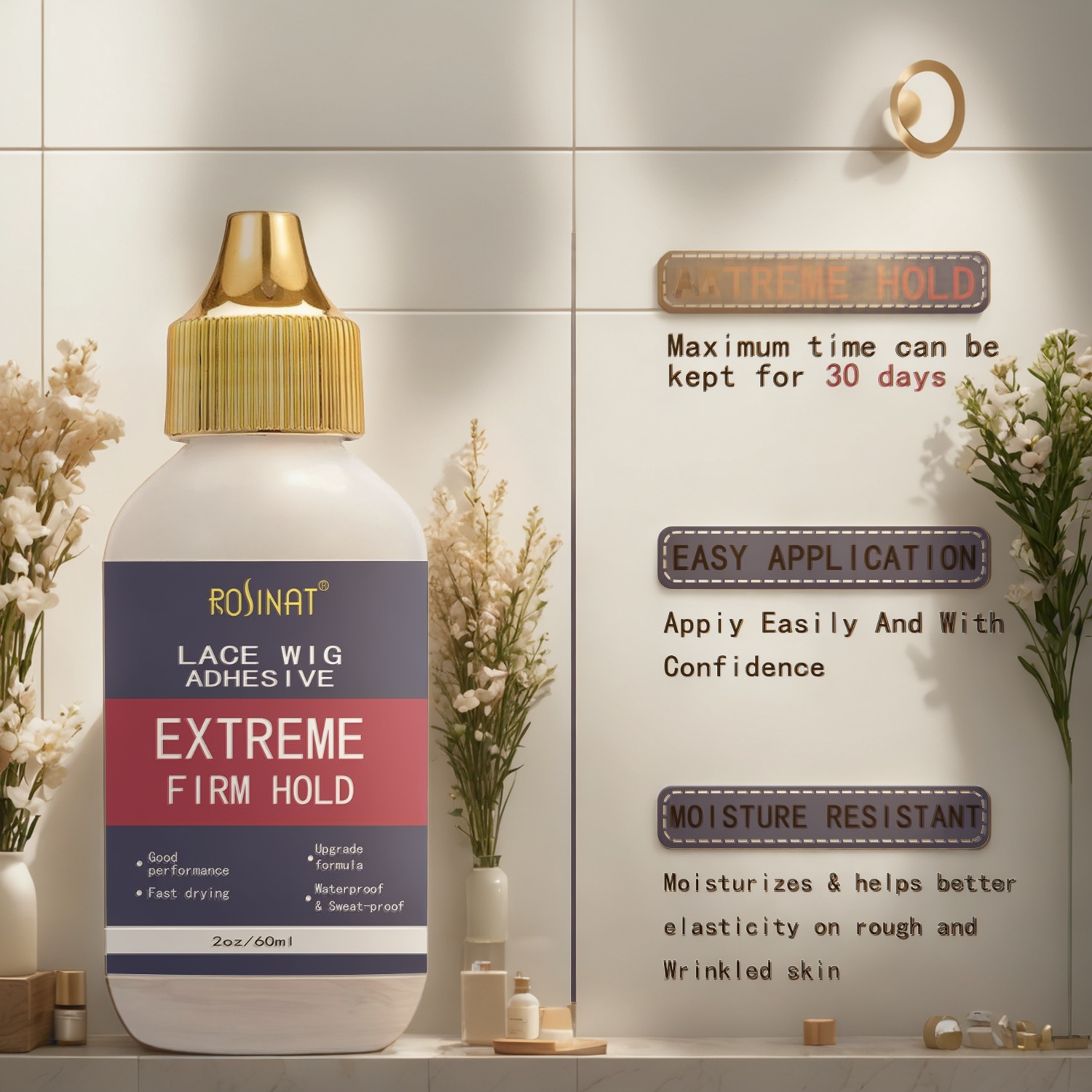
Deconstructing the Formula of a Strong Lace Glue
A truly effective adhesive is defined by its chemical composition. The primary goal is to create a polymer-based solution that forms a powerful yet flexible bond between the lace material and the skin. A strong lace glue achieves this through carefully selected acrylic or copolymer resins that cross-link as the solvent base evaporates. This process, known as curing, creates a durable film that is resistant to mechanical stress. Furthermore, a top-tier product is formulated to be a waterproof lace glue, incorporating hydrophobic polymers that repel moisture from sweat, humidity, and water. This prevents the bond from weakening and lifting prematurely. Fast-drying agents are also integrated to reduce application time, a critical factor for both professional stylists and at-home users. The result is an adhesive that offers extreme hold for extended periods, often up to several weeks, without compromising skin health.
The Power of Customization: OEM and Private Label Solutions
For beauty brands, offering a unique product is key to capturing market share. This is where manufacturing partnerships for OEM lace glue become invaluable. Original Equipment Manufacturing (OEM) allows a brand to work directly with a specialized producer, like Aibo Cosmetics, to develop a unique formulation. This process allows for complete control over the product's technical specifications. A brand can request a custom lace glue with specific characteristics, such as varying levels of hold strength, different drying times, or the inclusion of skin-soothing botanical extracts. Through private label lace glue services, a brand can leverage a pre-tested, high-performance base formula and customize its branding and packaging. Aibo Cosmetics’ R&D team utilizes advanced technology to modify viscosity, elasticity, and resistance profiles, ensuring the final product aligns perfectly with the brand's vision and target audience's needs.
Quality Control and Safety in Adhesive Manufacturing
The production of any cosmetic that comes into direct contact with the skin demands stringent quality control protocols. Manufacturing a safe and effective lace wig glue involves more than just a good formula; it requires adherence to international standards like Good Manufacturing Practices (GMP) and ISO certifications. These standards govern every step of the process, from the sourcing and testing of raw materials to production in a sterile environment and final batch testing. This ensures that every unit is free from contaminants and performs consistently. For instance, skin compatibility testing is essential to minimize the risk of irritation, making the product suitable for prolonged wear. Aibo Cosmetics' commitment to these quality systems guarantees that every adhesive produced is not only high-performance but also safe and reliable for the end-user.
Application Techniques for Optimal Performance
Even the most advanced adhesive requires proper application to achieve its maximum potential. The technical protocol begins with preparing the skin surface by removing oils and residues, typically with an alcohol-based cleanser. This ensures a clean substrate for the adhesive to bond to. The glue should be applied in thin, even layers—usually 2 to 4—with each layer allowed to turn clear and cure before the next is applied. This layering technique builds a stronger, more durable bond. Pressing the lace unit firmly into the adhesive and holding it for 60-90 seconds helps establish an initial, secure connection. Following the application, it is critical to avoid moisture and excessive sweating for at least 24 hours to allow the bond to fully cure and achieve its maximum waterproof and sweat-proof properties. This methodical approach ensures the longevity and integrity of the wig installation.